The market is growing. Consumer interest in sleep support reflects a measurable health concern, not merely a passing trend. The U.S. Centers for Disease Control and Prevention reported that 14.5% of adults had difficulty falling asleep in 2020, while 17.8% struggled to stay asleep. These figures help explain the demand for convenient, clearly labeled products.
Grand View Research valued the global dietary supplements market at approximately USD 177.5 billion in 2023. Its report projects continued expansion through 2030, creating opportunities for responsible private label development. However, market growth alone proves little. Evidence matters more. The NIH Office of Dietary Supplements notes that short-term melatonin use appears safe for most adults, while long-term safety remains less certain. It also highlights possible differences between supplement labels and actual contents.
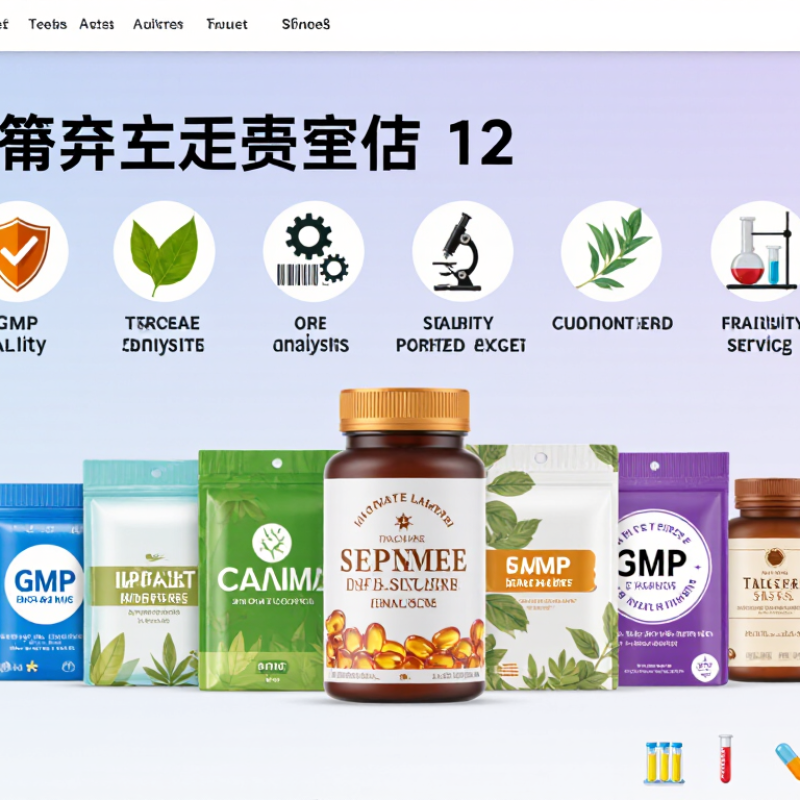
This guide introduces China’s leading suppliers of Private Label Sleep Support Supplements. The comparison considers manufacturing experience, GMP-related quality systems, ingredient traceability, stability testing, certificate of analysis practices, and formulation support. It also examines whether suppliers communicate claims carefully and provide documentation suitable for different markets. A polished website is not enough. Buyers should request current testing records and confirm production capabilities directly. That gap matters.
Some suppliers may excel in customized gummies, while others specialize in capsules, botanical blends, or low-sugar formats. Yet no supplier is perfect. Product consistency, evidence quality, and transparent communication can still vary. This overview therefore offers a practical starting point, not a substitute for independent due diligence, regulatory review, and sample testing before commercial launch.
Market Evidence: CDC Finds 1 in 3 Adults Sleep Less Than 7 Hours
CDC data shows that about one in three adults sleeps fewer than seven hours per night. This shortage affects daily energy, mood, and work performance. It also creates demand for sleep support supplements with clear, responsible positioning. For private label buyers, the strongest suppliers do more than offer attractive capsules. They provide ingredient specifications, batch testing, stability data, and transparent manufacturing records. These details help buyers assess quality before placing large orders.
A reliable supplier should explain dosage rationale without promising guaranteed sleep. Formulas may include nutrients or botanical ingredients commonly studied for relaxation and sleep support. Evidence can vary. That matters. Suppliers should identify allergens, testing methods, storage conditions, and shelf-life limits. They should also support compliant labels and careful wording for different markets. A polished brochure is not enough. One missing certificate can delay a launch or weaken customer trust.
Tips: Ask for recent third-party test results, not only internal documents. Check whether the supplier can provide pilot samples before production. Compare minimum order quantities, lead times, and packaging controls. Review claims with a qualified regulatory professional. Sleep problems can have medical causes, so supplement content should never replace professional care. I would also question unusually fast promises. Speed is useful, but rushed verification often becomes an expensive lesson.
Ingredient Benchmarks: NIH Lists Adult Magnesium Needs at 310–420 mg Daily
For private-label sleep support supplements, magnesium is a practical ingredient benchmark. The NIH Office of Dietary Supplements lists daily needs at 310–320 mg for adult women and 400–420 mg for adult men. These values refer to total intake from food and supplements, not a universal serving target.
The distinction matters. The National Academies set 350 mg per day as the upper limit for supplemental magnesium in adults, excluding food sources. Excess supplemental magnesium may cause diarrhea, especially with poorly absorbed forms. Supplier documentation should show elemental magnesium, not only the compound weight. Third-party testing should verify identity, potency, heavy metals, and microbial limits. Small label details matter.
Consumer demand also supports careful formulation. The Council for Responsible Nutrition’s 2023 consumer survey reported that 74% of U.S. adults use dietary supplements, although usage does not prove sleep benefits. Evidence for magnesium and sleep remains mixed, and deficiency status may influence outcomes. That uncertainty deserves honest wording. A supplier claiming universal relaxation may be overreaching. A stronger specification includes transparent dosage logic, stability data, allergen controls, and batch-level certificates of analysis. Formulators should also review medication interactions and sensitive populations with qualified professionals. Perfect sleep claims are not realistic.
The NIH Office of Dietary Supplements lists adult magnesium Recommended Dietary Allowances at 400–420 mg per day for men and 310–320 mg per day for women. Requirements increase to 350–360 mg during pregnancy, while lactation remains at 310–320 mg. These values provide an ingredient benchmark for private-label sleep-support supplement formulation.
Source: National Institutes of Health, Office of Dietary Supplements — Magnesium Fact Sheet for Health Professionals.
Top 10 Supplier Comparison: GMP, COA, MOQ, Lead Time, and Customization
China’s top ten private label sleep support supplement suppliers should be compared beyond product catalogs. During supplier evaluations, check current GMP certification, facility scope, and manufacturing records. A certificate alone is not enough. Ask whether it covers the specific dosage form and production site.
COA quality matters too. Request a batch-specific COA with identity, potency, microbiological, and contaminant results. Reliable suppliers can explain testing methods and provide traceable lot numbers. Compare MOQ carefully, because a low opening order may hide higher packaging costs. Lead time should include formulation approval, sampling, production, testing, and shipping. Customization may involve flavors, capsules, labels, packaging, and formula adjustments. More options can create more delays.
Tips: Request a written timeline and one sample before signing. Confirm revision limits for artwork and formulas. I once focused too heavily on MOQ and underestimated approval time. That was a useful mistake. Suppliers with strong technical communication often reduce later corrections, even when their initial quote is not the lowest. Ask practical questions, record every answer, and verify documents independently when possible.
China Compliance Framework: NMPA Rules, ISO 22000, and Batch Testing
China’s private-label sleep supplement market demands more than attractive packaging. Grand View Research valued the global dietary supplements market at approximately USD 177.5 billion in 2023. This growth increases scrutiny of Chinese suppliers and their compliance records.
Under China’s NMPA framework, health foods generally require registration or filing, depending on formulation and product category. Sleep-related claims must match permitted functional language and supporting evidence. Disease-treatment wording is unacceptable. Suppliers should provide product formulas, raw-material qualifications, stability data, and traceability records. ISO 22000 strengthens food-safety management, but certification does not replace NMPA obligations. The ISO Survey 2023 reported more than 57,000 ISO 22000 certificates worldwide, showing broad adoption, not automatic product compliance.
Batch control is where supplier quality becomes visible. Each lot should receive identity, potency, microbial, heavy-metal, and contaminant testing, based on the formula and destination market. Independent laboratory reports are preferable, with sample codes matching production records. Keep retain samples too. A certificate alone is not enough. Audit teams should compare the certificate number, laboratory accreditation, test date, lot code, and released quantity. In practice, some dossiers look complete but contain inconsistent dates or vague specifications. That weakness deserves attention. Compliance is a working system, not a folder.
Buyer Due Diligence: Formula Quality, Certifications, Capacity, and Export Data
China Top 10 Private Label Sleep Support Supplement Suppliers
Selecting among China’s top private label sleep support supplement suppliers requires more than comparing quotations. Request complete formulas, ingredient specifications, and recent batch records. Check melatonin, magnesium, botanical, and amino acid testing where relevant. Review certificates of analysis for identity, potency, microbial limits, heavy metals, and allergens. A retained sample should match the approved formula.
Certification evidence needs careful checking. Confirm GMP, HACCP, ISO 22000, or other certificates through the issuing organization. Verify the factory address, certificate scope, expiry date, and covered production lines. A certificate can look convincing yet exclude supplement manufacturing. Ask for stability data, packaging compatibility tests, and documented corrective actions. Small gaps matter.
Capacity should be tested against your forecast, not a sales presentation. Inspect monthly output, minimum order quantities, blending equipment, packaging lines, and backup suppliers. Confirm pilot-batch procedures and realistic lead times during peak seasons. Export data can reveal practical reliability. Review shipment history, destination markets, product categories, and repeated customs records when available. Unusual gaps deserve questions, not assumptions. One factory visit is useful, but it cannot prove every claim. I would still request independent testing before launch, even after a smooth audit. Some supplier documents may be outdated. That is a risk.
FAQS
Adult women generally need 310–320 mg daily. Adult men generally need 400–420 mg daily. These amounts include food and supplements. They are not automatic serving targets.
Adults should generally stay below 350 mg daily from supplements alone. Food magnesium is excluded from this limit. Too much supplemental magnesium may cause diarrhea.
Elemental magnesium shows the actual magnesium amount provided. Compound weight can look larger but may mislead buyers. This small label detail matters.
Request batch-level certificates of analysis. Testing should verify identity, potency, heavy metals, microbes, and allergens. Retained samples should match the approved formula.
No. Evidence remains mixed. Benefits may depend on deficiency status and personal health factors. Universal relaxation claims sound too strong.
Ask for the complete formula, ingredient specifications, stability data, and packaging compatibility tests. Review dosage logic and allergen controls. Some documents may be outdated.
Check the issuing organization, factory address, expiry date, certificate scope, and production lines. A certificate may exclude supplement manufacturing. Verification takes time.
Compare monthly output with your forecast. Check minimum order quantities, blending equipment, packaging lines, pilot procedures, and peak-season lead times. Sales presentations are not enough.
Review shipment history, destination markets, product categories, and repeated customs records when available. Unusual gaps deserve questions. One factory visit cannot prove everything.
Yes, independent testing adds protection, even after a successful audit. It can reveal formula, potency, or contamination problems. I would still request it.
Conclusion
China’s private-label market offers a broad range of sleep-support manufacturing options, but buyers should evaluate suppliers through measurable standards rather than marketing claims. This overview examines the evidence behind consumer demand, including the CDC’s finding that approximately one in three adults sleeps fewer than seven hours per night, and the NIH’s adult magnesium intake benchmarks of 310–420 mg per day. It also compares leading suppliers by GMP practices, certificates of analysis (COA), minimum order quantities, production lead times, and customization capabilities.
For buyers sourcing Private Label Sleep Support Supplements, compliance and due diligence are essential. The article explains how NMPA-related requirements, ISO 22000 systems, and batch testing can support product quality and export readiness. Before selecting a manufacturer, companies should assess formula transparency, ingredient sourcing, certification validity, production capacity, quality-control procedures, and relevant export experience. A structured evaluation helps reduce supply risks and supports the development of safe, consistent, and commercially suitable products for different markets.